

Scratch FREEE Polishing Waxes
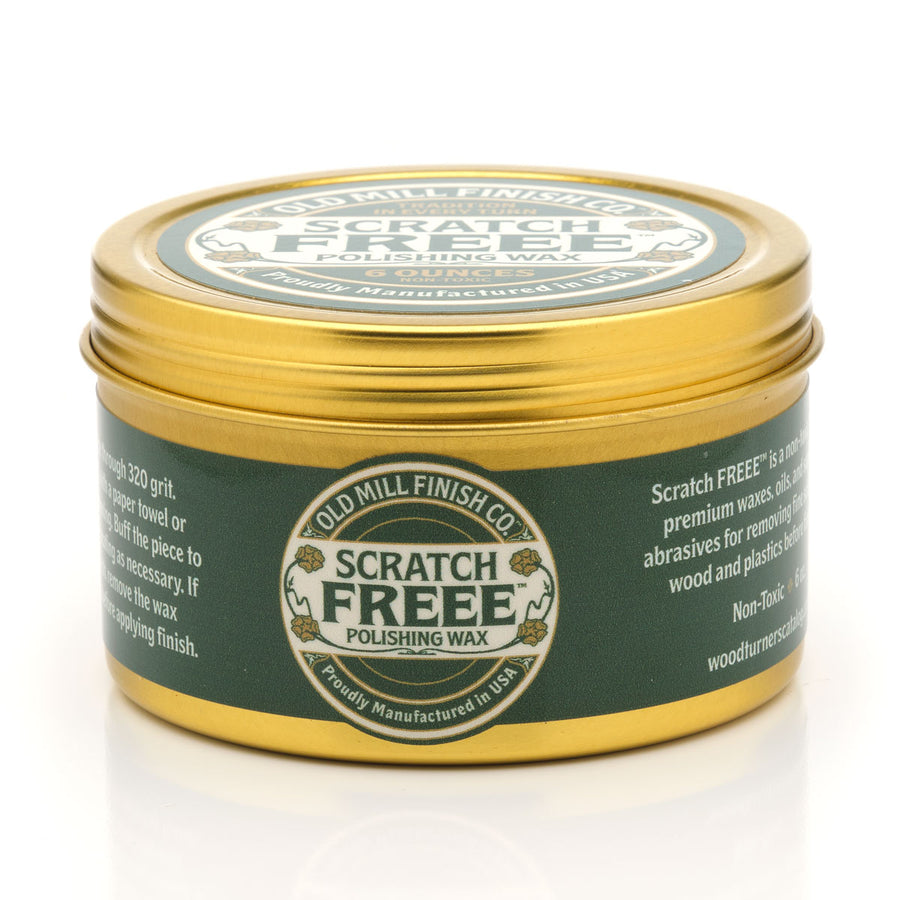
Back in 2012, we developed Scratch Freee as a food-safe alternative to traditional Tripoli polishing abrasive. Tripoli works well for refining wooden surfaces to get a higher gloss, but because it isn’t food safe, woodturners couldn’t use it on functional items like bowls, platters, or kitchen utensils. We wanted a food-safe version that delivered equal or superior results.
Recently, we reformulated and improved our Scratch Freee lineup. We refined the oil and wax compounds, upgraded the grit consistency, and rebranded the line under Old Mill Finish Co.
In this guide, we’ll cover the difference between our original and ultra-fine formulas, how to apply them, and how to integrate Scratch Freee into your finishing routine.
What is Scratch Freee Polishing Paste?
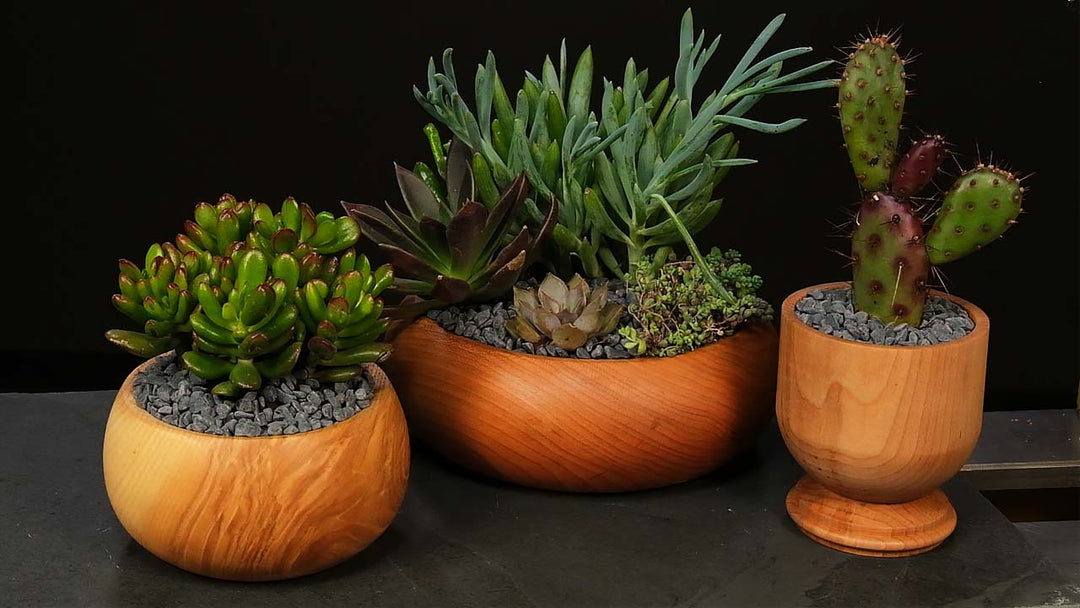
Think of Scratch FREEE as a liquid sandpaper suspended in a blend of food-safe oils and waxes. Once you sand your turning to 320 grit, applying Scratch FREEE refines the micro-scratches left by standard sandpaper and brings out the natural color, figure, and chatoyancy of the timber.
The Two Grit Levels
-
Scratch FREEE (Gold Tin): Comparable to roughly 1,000 grit sandpaper. As you apply friction and heat on the lathe, the abrasive particles tumble and break down, refining the surface closer to a 1,500 grit finish.
- Ultra-Fine Scratch FREEE (Black Tin): Comparable to roughly 2,000 grit, refining to closer to 3,000 grit. This step steps up the gloss and optical clarity to a mirror-like shine.
Available Sizes
Both formulas are available in two convenient sizes:
- 1.5 oz tin: Ideal if you want to try it out or keep a tin close at hand on the lathe.
- 6.0 oz tin: For turners who use it on every project.

Compatible Materials and Finishes
Scratch FREEE is versatile and works across virtually any material you mount on the lathe
- Hardwoods and softwoods
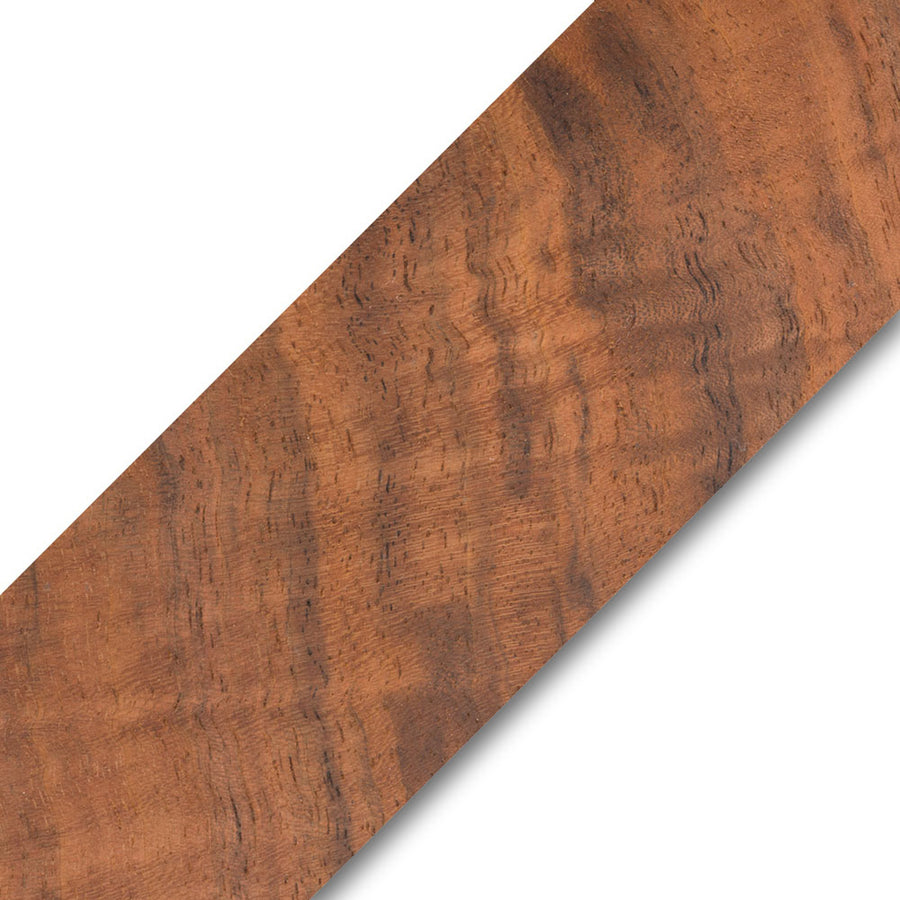
- Dense exotic woods and figure-heavy timbers (like Koa or Poplar)
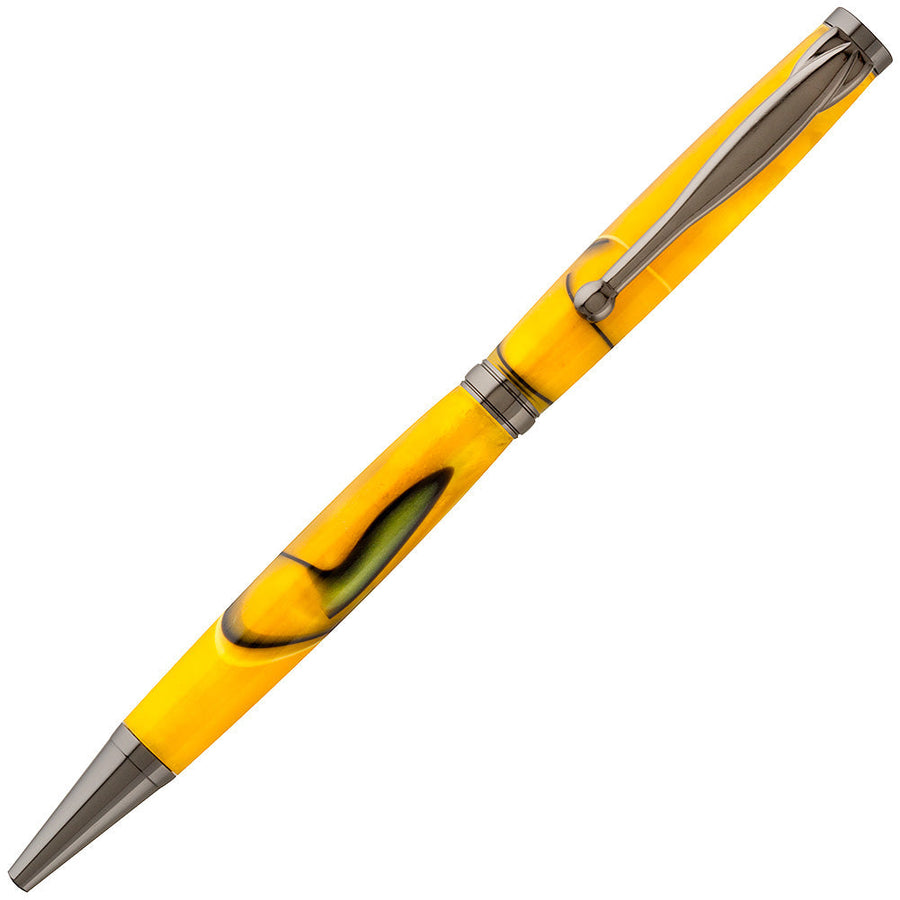
- Epoxy hybrids, resins, and acrylics
- CA finishes (Cyanoacrylate)
- Lacquer topcoats (used to cut back spray lacquer finishes for higher gloss)
Because it contains non-toxic, food-safe ingredients, it is clear and leaves no discolored residue behind—even on light, open-grained woods like White Poplar or Cottonwood.
Step-by-Step Application Guide
Step 1: Prep the Workpiece
Because 1,000 and 2,000 grit polishes refine the surface rather than remove deep gouges, proper pre-sanding is critical.
- Sand up to 320 grit.
- Check for radial scratch lines. Ensure you’ve sanded with the grain (lathe off) between finer grits to eliminate any coarse 180 or 220 grit scratches.
- Clean the surface. Blow off dust with compressed air, then wipe the surface with denatured alcohol to remove fine dust trapped in the wood pores.
Step 2: Apply Scratch FREEE
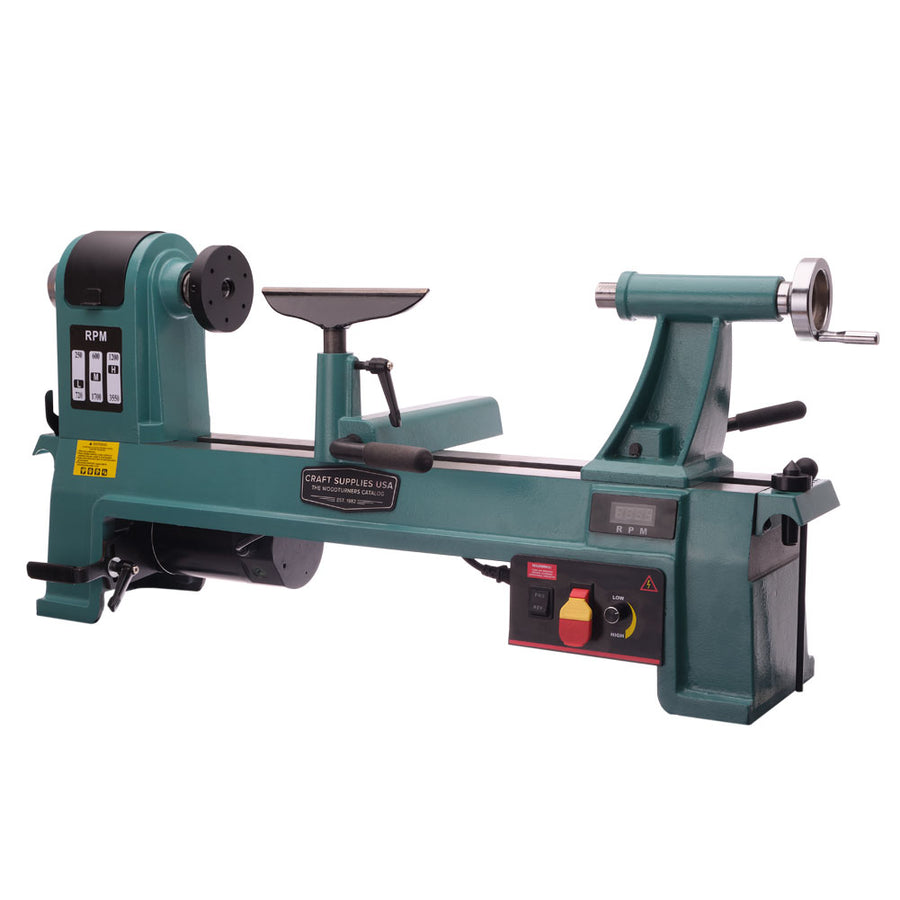
- For small spindle turnings (around 1.5” diameter), set the speed near 1,800 RPM. For larger bowls (around 8” diameter), run at a safe upper limit, around 1,300 RPM.
- Take a dime- to nickel-sized amount on a cloth (flannel finishing squares or sturdy paper towels work best). Do not put a heavy glob straight onto the spinning workpiece, as centrifugal force will sling it onto your lathe or smock.
- With the lathe stopped or spinning slowly, wipe the paste evenly across the entire surface.

- Bring the lathe up to speed. Apply firm, steady pressure with your cloth to generate friction heat. This heat melts the wax and lets the abrasive particles break down as they polish the surface.
Pro Tip: If you’re turning tricky or figure-heavy timber with lifted fibers, re-apply a small amount of paste and polish with the lathe running in reverse. This polishes the grain from the opposite direction for an even smoother result.
- Take a clean piece of cloth and buff away any excess wax and leftover abrasive particles.

Step 3: Refine with Ultra-Fine
If you want maximum optical clarity and chatoyancy—especially on highly figured or burl woods—move straight to the Ultra-Fine (Black Tin).
- Repeat the application process using a fresh cloth square.
- Apply moderate friction to break down the finer abrasives.
- Buff off the excess wax with a clean cloth.

How Scratch FREEE Fits into Your Finishing Workflow
Because Scratch FREEE contains natural waxes and oils, it is helpful to know how it interacts with other finishes:
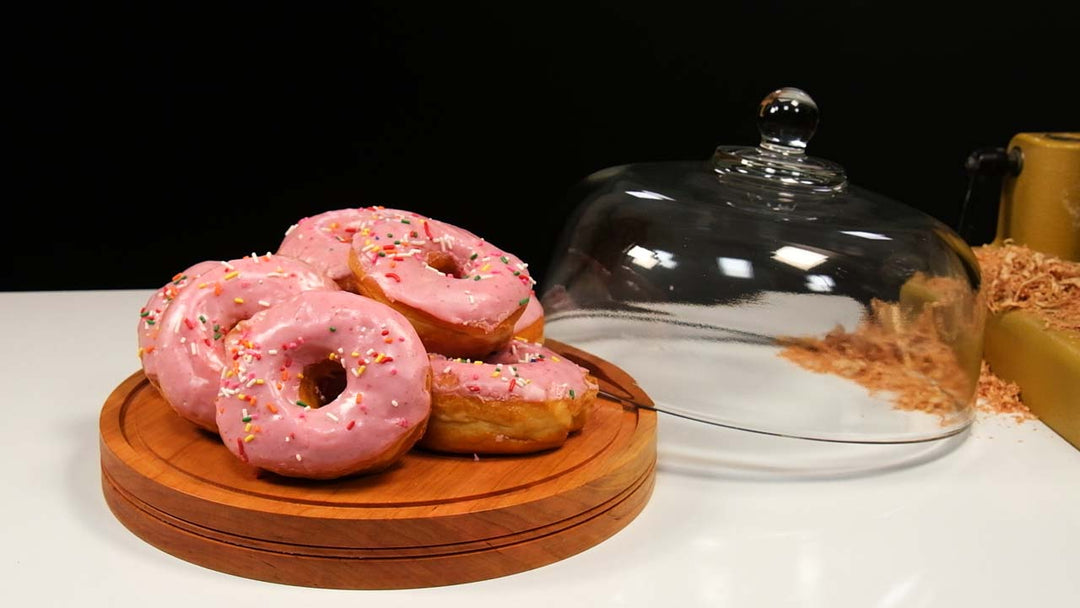
- As a Standalone Finish: For functional kitchenware (salad bowls, cutting boards, utensils), Scratch FREEE can act as your final food-safe finish.
- Over Penetrating Oils (Drying Oils): If you prefer using boiled linseed oil or tung oil, apply the oil first and let it sit or dry overnight. Apply Scratch FREEE the following day. The friction and heat generated during polishing will help drive the oil deeper into the wood while refining the top surface.
- With Solvent-Based Topcoats: If you plan to apply solvent-based finishes (like Waterlox), wipe the piece down with denatured alcohol or stripper after polishing to strip the wax barrier before applying the topcoat.
- What to Avoid: Do not use Scratch FREEE prior to applying water-based or traditional spray lacquers, as the residual wax can interfere with lacquer adhesion.


Summary
Whether you’re working on dense exotic hardwoods, acrylic pen blanks, or food-safe salad bowls, Old Mill Finish Co. Scratch FREEE offers a fast, non-toxic, and effective way to achieve a professional-grade finish.
Have questions about using Scratch FREEE on your specific woodturning project? Leave a comment below or contact our team at Craft Supplies USA!
Featured posts