

Turning a Calabash Bowl
If you love working with unique materials or you’re looking for a project that delivers instant gratification without waiting months for wood to dry, a green wood bowl is the perfect place to start.
In this guide, I’ll walk you through how to turn a beautiful Calabash bowl out of wet wood, from mounting the raw blank to pulling off a flawless finish all in one session.
What is a Calabash Bowl?
Traditionally, a Calabash bowl features a distinctively round bottom.
- Because there is no flat base, the bowl sits, rocks, and finds its own natural balance point.
- We intentionally turn the walls nice, thin, and uniform. As the wet wood dries over the following days, it moves, warps, and changes shape into an incredibly cool, organic oval form.
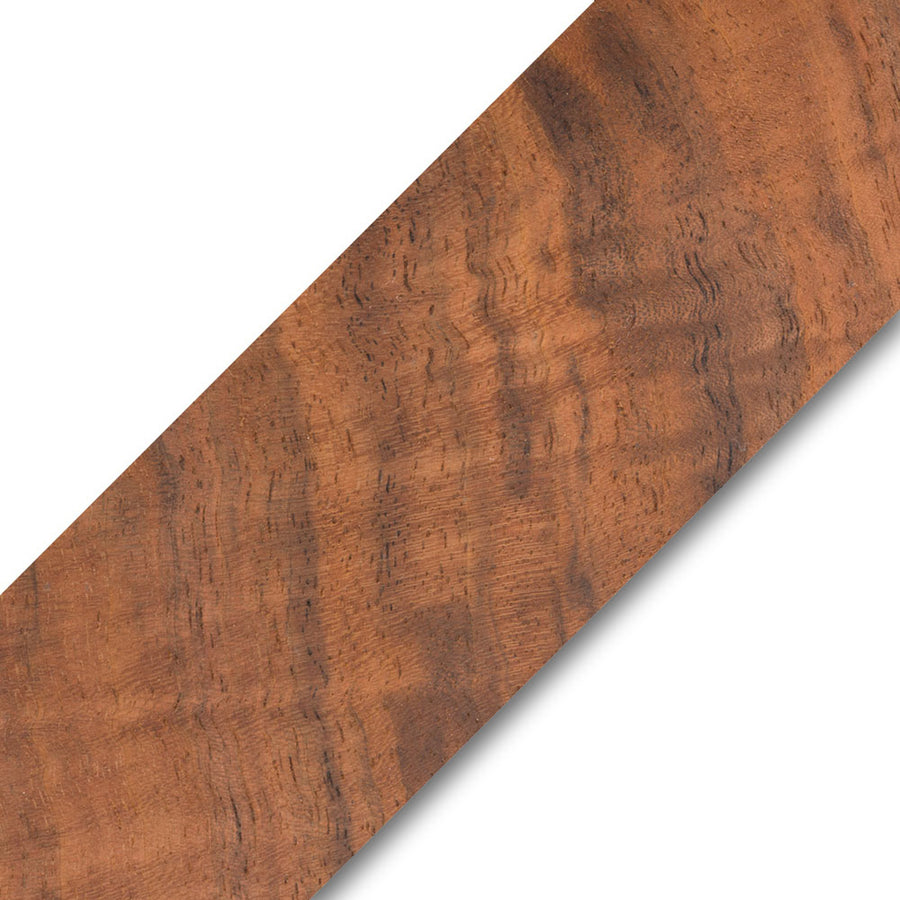
For this project, I’m using Gambels Oak (a type of white oak). It boasts stunning color patterns that almost resemble olive wood but with a classic oak grain.
Step 1: Mounting the Blank to the Lathe
We start with a half-log blank roughly 3” deep by 8-1/2” in diameter.
Finding the Open Face
Look closely at the growth rings. We want the growth ring side facing the pith to be the open bowl face. As green wood dries, it naturally closes over on itself. Turning it this way ensures we get maximum movement and that classic “closed-in” Calabash rim.
Using a Screw Chuck
- Pre-drill a 1/4” hole (matching the root diameter of a 3/8” screw chuck).
- Spin the lathe nice and slow. Safely bring the blank up to the spinning screw chuck; it will catch and seat itself securely against the collar. (Note: If you aren’t comfortable doing this under power, just thread it on by hand!)
Step 2: Truing Up the Blank & Roughing
Before cranking up the speed, we need to bring the blank to a round, concentric shape.
Staying Out of the Line of Fire
Safety Tip: Never stand directly in line with a spinning bowl blank, especially if you suspect cracks. Stand off to the side so that if a catastrophic catch happens, the wood flings past you, not into you.
Eliminating Tear-Out
- Set your 5/8” bowl gouge so the cutting edge sits right at the center line.
- Bring the tool across the end-grain fibers from the headstock side, but stop before the edge. Then, come back from the opposite side to finish the cut. This prevents blowing out the unsupported fibers on the rim, preserving every bit of your bowl’s depth.
Once the blank is trued up, bump your lathe speed from 800 RPM up to about 1100–1200 RPM.
Step 3: Shaping the Exterior & Adding Detail
With a Calabash bowl, the deeper it is, the better. Use a pulling/drawing cut to quickly remove bulk material and establish a smooth, flowing curve.

Plan Your Details Early
It’s easy to get into “autopilot mode” while roughing and accidentally turn away the material you wanted for decoration. For this bowl, I decided to add three medium-sized decorative beads right near the upper rim using a pencil line layout, a skew to establish the grooves, and a spindle gouge to roll the beads.
Cutting the Tenon
Mark your foot dimensions using dividers (only engage the front leg to avoid a dangerous catch). For the tightest grip on my shark jaws, I used a specialized Dovetailer tool to create a perfect, flat registration surface at a 1/4” depth.
Step 4: Hollowing the Inside
Swap the screw chuck for your four-jaw chuck.
The 45-Degree Trick for True Running
When mounting your tenon, rotate the side grain 45 degrees away from the jaw slots. Side grain compresses more easily than end grain. Offsetting it prevents the bowl from seating unevenly and running out of true.
Incremental Hollowing
When hollowing a severe undercut rim like a Calabash, do not hollow the whole center first!
- Keep the mass and supporting timber in the center while you refine the thinness of the outer rim.
- Aim for a consistent 1/4” wall thickness. Working in progressive layers keeps the wood from flexing or chattering as you get thinner.

The Center Nub Removal
As you approach the very center of the bowl, the wood is spinning at a much slower speed. Slow down your feed rate and let the tool gently shave off the final center nub. Do not push through or snap it off, or you will tear out the deep grain fibers.
Step 5: The Jam Chuck Method for Finishing the Bottom
To seamlessly finish and round off the bottom curve, we need to remove the tenon. The best way to do this is with a jam chuck.
- Mount a scrap piece of wood onto your screw chuck.
- Turn a slight taper until you find the exact diameter where your bowl’s rim snugly “pops” into place. Take your time and sneak up on the fit, you really don’t want to crack the bowl by forcing it over a fit that is too tight.
- Bring up the tailstock with light pressure for extra safety.
- Turn away the tenon, blend the bottom curve to match the horizon of the bowl, and sand through 320-grit paper.

Prying it Off Safely
To remove the bowl without damaging the rim, use a narrow parting tool to cut a small groove into the waste block right next to the rim. Gently leverage the parting tool into the groove to pry the bowl off using the waste wood as an interface.

The Ultimate Reveal: 24 Hours Later
Because we turned this bowl with an even, thin wall thickness, it won’t crack—but boy, will it move!
Leaving the Gambel Oak bowl overnight, it tightened up by a 1/4” in width over just 24 hours. The open pores give it a gorgeous texture, and the grain pattern looks absolutely striking.

Bonus Extra Credit: While waiting for your bowl to dry, use the matching offcuts to carve a couple of wooden spoons for a complete salad set!

Featured posts